Identifying tumour characteristics to predict immunotherapy response
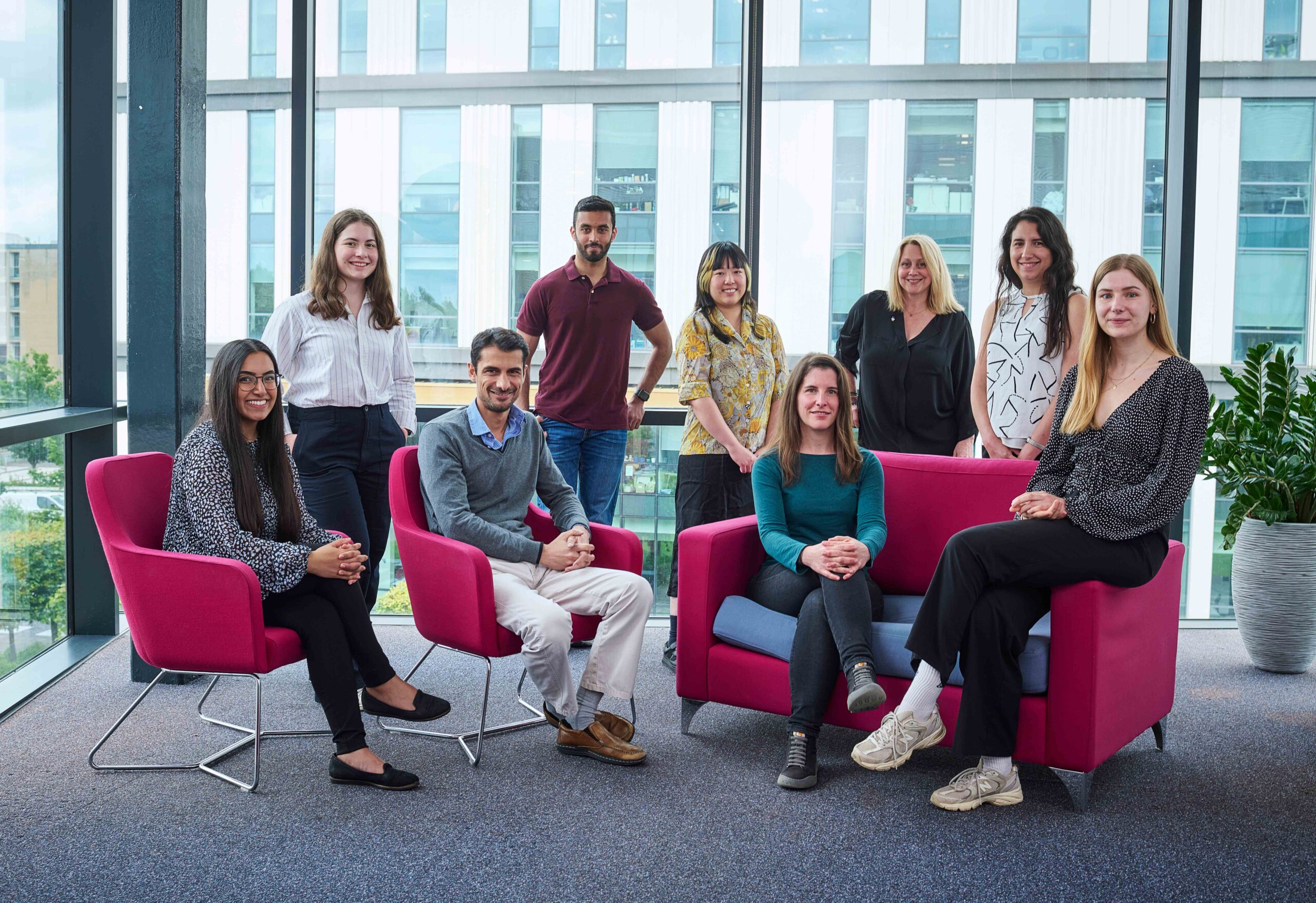
Tumour characteristics could be used to predict whether patients with an aggressive subtype of breast cancer are able to respond to immunotherapy, according to new research from the Ali Group and Fondazione Michelangelo published today, 6 September 2023, in Nature.
There are an estimated 2,000 people living with triple negative breast cancer (TNBC) in England. However, despite only accounting for 15% of all breast cancer cases, TNBC is responsible for a quarter of all deaths from breast cancer in England, making it a particularly aggressive form of the disease.
Triple negative breast cancers are cancers whose cells don’t have receptors for the hormones oestrogen and progesterone, or a protein called Human Epidermal Growth Factor Receptor 2 (HER2).
Immunotherapy has transformed the treatment of many solid tumours, however, it’s best use in breast cancer is still unclear. Clinical trials have suggested that a type of immunotherapy called Immune Checkpoint Blockade (ICB) can benefit some patients with TNBC, but we lack reliable methods of predicting which patients may respond to the treatment.
As ICB targets cell to cell interactions, the effectiveness of ICB as a treatment for breast cancer depends both on the cells within the tumour and how those cells are arranged spatially within the tumour.
New research from the Ali Group, in collaboration with Fondazione Michelangelo and San Raffaele Hospital in Milan, used 660 tumour biopsy samples from patients before their treatment, during treatment and after treatment to map tissue structure and identify unique predictors of whether a patient would respond to treatment.
They looked within the samples for the presence of 43 key proteins, indicative of the characteristics and behaviour of different cells. Using a technique called imaging mass cytometry, they produced detailed images, which revealed precisely how each of the 43 proteins were distributed across the tumour. With statistical modelling, the researchers were able to identify unique features that differed between a patient who was able to respond to ICB and one that wasn’t.
The team found that they were best able to predict which patients would be able to benefit from ICB treatment by combining information about the tissue features from before and during treatment. This suggests that early biopsies would be a useful addition to clinical practice to help guide personalised treatment plans and improve patient outcomes.
Dr Raza Ali, co-Senior Author and Group Leader at the Cancer Research UK Cambridge Institute, said: “Immunotherapy harnesses the body’s own defences to fight cancer.
To be effective, we found that immunotherapy requires certain immune cell types to be in the right spatial context. We are now taking this research further by investigating whether a simple test could be used to identify which tumours are likely to respond to immunotherapy, so that it could be used in a routine clinical setting.”
Ciccy Wang, first author, said: “Using a cutting-edge multiplexed imaging technology, we characterised the multicellular architecture of breast tumours and, for the first time, showed how it is remodelled by immunotherapy, revealing insights into how the different arrangements of cells in different patients results in different treatment outcomes. What we found suggests that similar approaches could be useful in other tumour types to understand why patients respond differently to immunotherapy.”
Dr Giampaolo Bianchini, co-Senior Author and Head of Breast Cancer Group at the San Raffaele Hospital and Scientific Coordinator of Translational Researches at Fondazione Michelangelo, said: “Our work represents a significant contribution toward precision immunology. We are now working to integrate this information with data derived by RNA and DNA-sequencing to unveil a comprehensive view on the landscape of the TNBC ecosystem.”
This research was made possible through support from the Flow Cytometry and Histopathology Core Facilities at the Cancer Research UK Cambridge Institute. It was supported by Cancer Research UK, the Associazione Italiana per la Ricerca sul Cancro and the Breast Cancer Research Foundation.
The paper is available to read here: https://www.nature.com/articles/s41586-023-06498-3
“We are now taking this research further by investigating whether a simple test could be used to identify which tumours are likely to respond to immunotherapy, so that it could be used in a routine clinical setting.”
Dr Raza Ali
Related News
See all news-
Sophie Kinsella’s family meet the brain cancer researchers carrying forward her legacy
5th October 2026
Sophie Kinsella’s family has unveiled a plaque in her honour at laboratory focusing on glioblastoma.
Find out more -

Maike de la Roche promoted to Research Professor
1st October 2026
Congratulations to Prof Maike de la Roche, following her promotion to Research Professor at the Cancer Research UK Cambridge Institute (CRUK CI).
Find out more -
Dr Magdalena Crossley awarded £2 million Wellcome Career Development Award
11th September 2026
Dr Magdalena Crossley has been awarded a £2 million Wellcome Career Development Award to investigate how unusual RNA-DNA structures contribute to cancer and other diseases.
Find out more