Artificial intelligence
Using artificial intelligence to enhance cancer research and treatments.
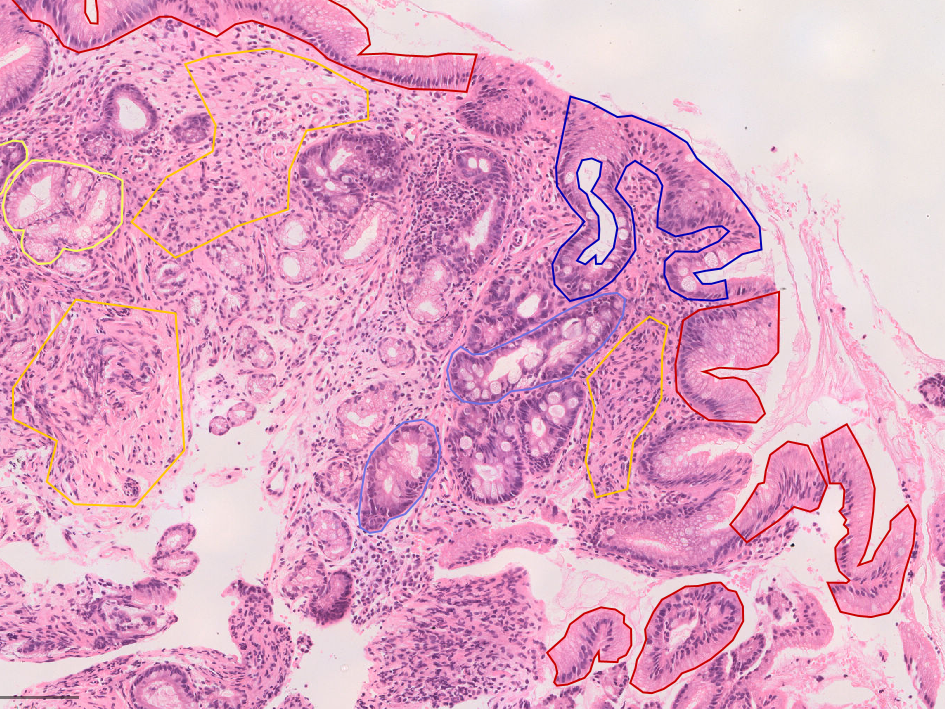
We are using artificial intelligence (AI) to advance our understanding and treatment of cancer.
Modern experiments generate vast amounts of complex data that can be hard analyse. AI and machine learning help us to process this data more effectively, uncovering new patterns and insights.
The Brenton and Markowetz Groups have used AI to identify patterns of chromosomal instability, the frequent changes in the number or structure of chromosomes within cancer cells. These patterns help us understand the mechanisms that drive cancer development and enable us to predict vulnerabilities in cancer cells.
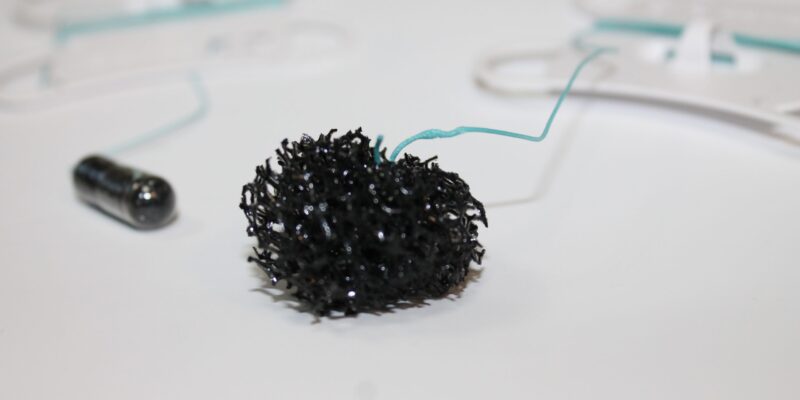
The Markowetz Group has also used AI to classify imaging data from radiological images and cell samples, including those collected with the Cytosponge method for monitoring Barrett’s oesophagus to save pathologists time by automating the analysis process. The Ali Group and IMAXT Lab use machine learning to analyse spatial profiling data, helping to identify cellular signals and variations in tissue organisation.
We aim to expand our use of AI to generate new research hypotheses and explore further areas of cancer biology. By developing AI models trained on extensive datasets, we aim to place computational biology at the core of our discovery process. This approach will enable us to uncover new insights and improve patient outcomes, ultimately transforming cancer research and treatment.
Research Groups
-

Ali Group
Find out moreSystems cancer pathology
-
Aliee Group
Find out moreExplain. Predict. Outsmart cancer.
-

Brenton Group
Find out moreFunctional genomics of ovarian cancer
-

Creixell Group
Find out moreCancer signalling and therapeutics
-

Gilbertson Group
Find out moreCellular and molecular origins of cancer
-

Hannon Group
Find out moreSmall RNAs and mammalian genomics
-

Markowetz Group
Find out moreComputational oncology
Related News
See all news-
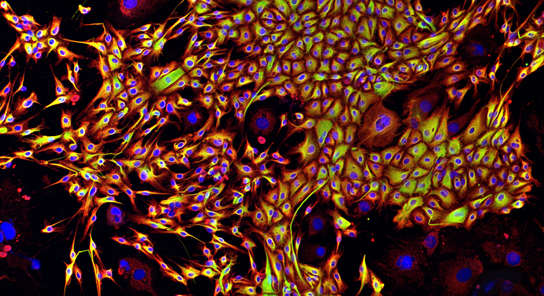
1M to advance AI powered personalised ovarian cancer care
19th February 2026
Researchers from our Brenton Group are part of an international team awarded the Global Ovarian Cancer Research Consortium’s inaugural AI Accelerator Grant.
Find out more -
Scientists create test to predict chemotherapy resistance
23rd June 2025
Scientists at the Cancer Research UK Cambridge Institute have created a test which can successfully predict whether cancer will resist common forms of chemotherapy treatment.
Read more -
Dr Hana Aliee appointed as a Junior Group Leader
17th June 2025
At the Cancer Research UK Cambridge Institute, Dr Aliee will lead her team to develop new methods that uncover how gene expression and cellular behaviour change across environments, individuals, and disease states, advancing more personalised and inclusive healthcare solutions.
Read more