Sustainability
We are driving research forward in as sustainable and environmentally responsible a way as possible.

We are taking strides to reduce our impact on the environment without compromising on our mission.
Laboratory research is often highly energy intensive. By integrating innovative sustainable practices into every aspect of our operations, we are tackling this issue head on.
Over the next 7 years we will continue to assess and address our environmental impact, focusing on areas most affected by our day-to-day activity including our energy, waste, and water management.
Our progress so far
-
37% reduction in energy-related carbon emissions versus 2019
-
21% reduction in gas usage versus 2019
-
19% reduction in electricity usage versus 2019
Our affiliations with Cancer Research UK and the University of Cambridge shape our approach to environmental responsibility. Cancer Research UK has laid out its plans to reach absolute net zero by 2050 and the University of Cambridge by 2048, targets which we intend to match.
Both organisations are signatories of the Concordat for the Environmental Sustainability of Research and Innovation Practice. The Concordat sets out a common ambition for the UK to continue delivering cutting-edge research in a more environmentally responsible way.
Meeting international standards
At the Institute, we have maintained the international energy management accreditation ISO 50001 since 2013 and have also incorporated the University’s broader ISO 14001 accreditation.
These frameworks go beyond regulatory compliance and require us to adopt an energy-management model of continual improvement. In the first half of 2025, our energy-related carbon emissions were down 37% compared to 2019.
To build upon this progress, our LED lighting project is well underway. This will see nearly 2,300 bulbs across our building replaced with Smart LED alternatives.
We also received special recognition from the University of Cambridge for the innovative method we have used to divert old light fittings from general waste by separating the metal and electrical components into individual recycling streams.

Silver LEAF accreditation
We have received the Silver Lab Efficiency Assessment Framework (LEAF) award, an international standard developed by University College London to support laboratories to reduce their carbon emissions.
One key aspect of LEAF is assessing and reducing lab waste. For example, in 2024 we diverted over 3,000 containers from incineration by using reusable sharps bins and are now looking at ways to reduce our clinical waste through decontamination and recycling.
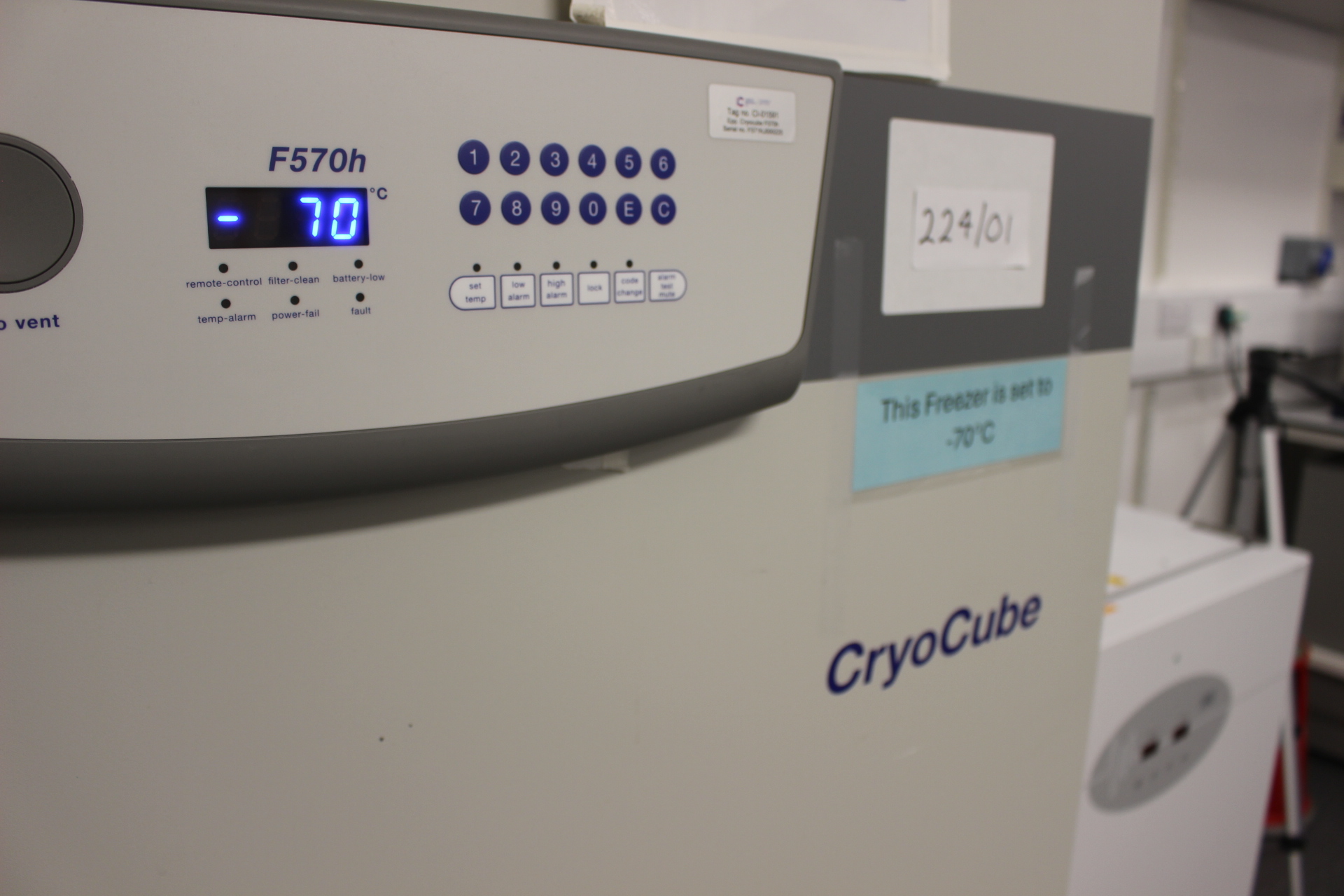
In terms of energy usage, we have increased the temperature of our ultra-low temperature freezers by 10°C, reducing their electricity consumption by up to 35% in the process.
Each of our Research Groups and Core Facilities is committed to maintaining our LEAF status. Visit their individual pages to find out more about their work.

Reducing the impact of our wider operations
To reach our sustainability targets, we must evaluate our current processes and make changes to the way we work. This includes reviewing our purchasing decisions to identify more sustainable choices, investing in innovative equipment, and investigating renewable energy possibilities.
In line with University of Cambridge decarbonisation targets, we are replacing natural gas-generated steam equipment such as autoclaves with new electricity-generated versions.
We are also looking to extend our water metering capabilities to help us continue to monitor and better understand our water usage.
The Institute works with several partners who understand our environmental vision. We recently collaborated with suppliers to innovate and change their packaging to reduce our polystyrene waste.
Our public café serves vegetarian and vegan options daily, and uses the produce grown from the Institute Gardening Club when available.

Empowering and educating our community
By increasing the energy and environmental awareness of our building users, staff, and students, we can encourage more sustainable practices and reinforce our Institute goals.
The Institute provides storage for over 200 bicycles, as well as onsite lockers, showers, and changing facilities. Staff have access to 3 pool bikes and can take advantage of the University of Cambridge’s range of car sharing schemes.
We offer regular behind-the-scenes building tours to share our sustainability journey and encourage new ideas. Our Gardening Club also helps to empower our community with knowledge and foster enthusiasm for greener lifestyle choices.
Our Green Impact Committee, made up of staff and students, are proud Platinum Award winners for 2025. This is a University of Cambridge initiative that engages and assesses University departments on all aspects of their environmental impact.
The team of volunteers undertake initiatives including regular “stationery amnesties” to avoid overconsumption of office supplies, and equipment switch-off campaigns to encourage energy saving.

Sustainability case studies
Temperature check!
Following an energy usage study, we identified that increasing the temperature of our Ultra Low Temperature (ULT) freezers from -80°C to -70°C led to energy savings of up to 35%.
Over half of all ULT freezers in the building have now been adjusted to the warmer temperature.
Our researchers have also troubleshooted other ways to improve freezer efficiency such as reorganising how items are stored and refining freezer maintenance schedules. This has led to a number of scientific fridges being turned off completely!

Single-use plastic in science
We’ve asked all our Research Groups and Core Facilities to review their use of consumables. Whilst scientific protocols can make significant waste feel inevitable, we’re continuing to challenge ourselves to find innovative solutions to limit single-use plastic in our research.
The Research Instrumentation and Cell Services team, for example, have found that square dishes used in Western Blot experiments can be washed and reused, removing this waste from the experiment cycle.
Scientists in the Jackson Group have also recently changed the way they handle bovine serum, which prevents up to 40 Falcon tubes from being discarded each week.

Wasting less water
We have several water meters throughout the Institute and plan to increase meter numbers to understand our building’s water consumption more fully and assist us to make strategic water reduction decisions.
The Biological Resources Unit has recently installed new rack washers that use 75% less water than previous models.
Groups including the Gilbertson and Creixell Groups now use Armor beads in their water baths to reduce water volume, and the Ali Group has installed electrical timers on their water baths to prevent excess usage.
To reduce their reliance on ice, the Biffi Group have also explored dependable alternatives where appropriate, such as using cool blocks of metal.

Want to make an impact?
We are looking for talented and passionate scientific and operations staff to join us in our mission to create a world where people can live free from the fear of cancer.
Search our vacancies