Order of cancer-driving mutations affects chance of tumour development
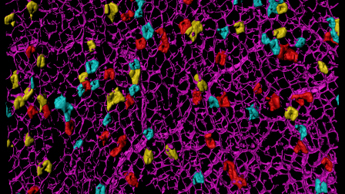
New research from the Winton Group has revealed that the order of cancer-driving mutations plays an important role in whether tumours in the intestine can develop.
Colorectal cancers were commonly thought to develop when cells accumulate mutations in a sequence of cancer-promoting genes such as APC, KRAS, and TP53. In this model, an initial mutation in APC is followed by additional mutations that further help a tumour to grow.
However, recent studies have questioned this simple progression. Cancer-promoting mutations have been found in normal intestinal tissue, and some tumours appear to form through cooperation between neighbouring cells carrying different APC mutations.
To investigate these patterns more closely, the Winton Group examined how the timing and sequence of mutations affect the earliest stages of tumour development. Using mouse models, the team tested two complementary approaches.
In the first approach, the team introduced specific cancer-driving mutations into intestinal cells, then exposed tissue to ENU, a compound that induces random mutations.
In the second approach, ENU was used to create a range of random mutations first before the team then switched on the specific cancer-driving mutations at controlled time points.
By comparing outcomes, they showed that mutations do not act in isolation. Instead, their effects depend heavily on the genetic environment in which they happen.
The study, published today in Nature, found that many intestinal cells that do carry cancer-driving mutations are then removed through strong negative selection. Only a small minority survive long enough to influence the future development of a tumour.
Importantly, some mutations, including certain mutations of the gene APC, appeared to disadvantage cell survival unless they happened after other mutations had already taken place. This suggests that earlier mutations can shape the tissue environment in ways that can then influence whether later cancer-driving mutations are able to push a cell towards becoming cancerous.
Though more research is needed to understand how this applies in humans, the findings show that early genetic changes can have a significant influence on cancer risk. These insights into how mutation order affects tumour development may help direct future treatment and prevention strategies towards the earliest stages of tumour initiation.
This work was made possible by the Biological Resource Unit, Genomics, Microscopy, Histopathology and Bioinformatics core facilities at the Cancer Research UK Cambridge Institute.
Dr Filipe Lourenco, First Author and Research Associate at the Cancer Research UK Cambridge Institute said: “This study shows that some mutational events previously thought to occur later in cancer evolution are actually critical for the survival of cells harbouring the tumour-initiating mutations. My future research will focus on understanding why these initiating mutations are negatively selected unless supported by other driver mutations, and on uncovering the nature of these interactions. Together, this will help clarify the early evolutionary steps that lead to tumour formation.”
Dr David Adams, co-author and Senior Group Leader at the Wellcome Sanger Institute, said: “This work has helped us understand how early genetic changes influence tumour development and subsequently cancer risk. We hope it can provide a useful stepping stone for having a deeper understanding of colorectal cancer in humans and bring us closer to preventing this deadly cancer at the earliest possible stage.”
“The fact that many of the most common colorectal cancer mutations are removed by negative selection highlights how vulnerable they actually are. Our findings suggest that these drivers only succeed once earlier mutations have altered the tissue environment. That raises the possibility that prevention efforts could focus on limiting the growth of those early changes, rather than targeting the mutations that appear most powerful in the disease.”
Prof Doug Winton, Senior Group Leader at the Cancer Research UK Cambridge Institute
Related News
See all news-
Most detailed map of breast tissue changes reveals role of menopause in cancer susceptibility
31st March 2026
Scientists have created the most detailed map to date, comprising over 3 million cells, showing how breast tissue changes as women age – including dramatic changes during menopause.
Find out more -
Hannon Group joins global team to decode cancer’s dark proteome
4th March 2026
Prof Greg Hannon and his group joins global Cancer Grand Challenges team taking on the dark proteome challenge.
Find out more -
1M to advance AI powered personalised ovarian cancer care
19th February 2026
Researchers from our Brenton Group are part of an international team awarded the Global Ovarian Cancer Research Consortium’s inaugural AI Accelerator Grant.
Find out more