New findings in ER+ breast cancer
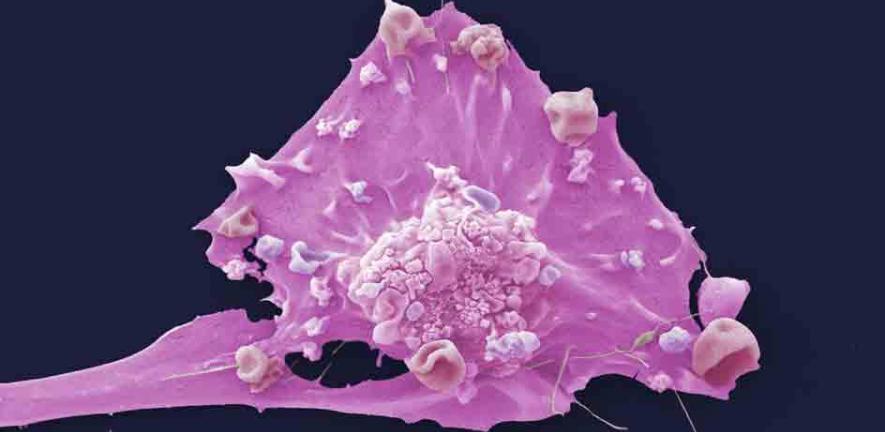
Researchers at the Institute have discovered that estrogen-dependent gene expression in breast tumour cells is not cyclical, as previous studies have suggested.
Breast cancer is the most common form of cancer, and in 70% of cases tumour growth is driven by the hormone estrogen. This form of breast cancer is called estrogen receptor positive (ER+) breast cancer.
Understanding how cancer cells respond to estrogen is vital as many frontline drugs for ER+ breast cancer target this process. Studies in the early 2000’s saw that in response to the hormone estrogen, the estrogen receptor binds to DNA in the nucleus, activating nearby genes and causing tumour cells to grow and divide. They also found evidence that certain genes in ER+ breast cancer were being turned on and off in a cyclical nature, each cycle being approximately 90 minutes in duration.
However, due to the technology available at the time, these earlier studies could only look at the effects of estrogen on a small number of genes.
In this latest study published in eLife, Dr Andrew Holding from the Markowetz Group applied a cutting-edge genome sequencing technique, called parallel factor ChIP-seq, to investigate the effects of estrogen in greater detail across all genes in breast cancer cells. Unlike the earlier studies, they found no genes that were expressed in 90-minute cycles. Instead, the expression of genes was found to be highly variable, with estrogen receptor binding sustained, which may make the cells even more responsive to estrogen.
After analysing published data from previous studies, the team discovered the reports of cycling to be inconsistent and sometimes contradictory. It is most likely that these reported 90-minute cycles were seen due to technological limitations and lack of replicates.
Understanding how estrogen affects genes and tumour growth is a crucial building block to support the development of future treatments. These findings help resolve earlier contradictory reports about the effects of estrogen and so create a more solid foundation for future research into ER+ breast cancer.
Read more:
Genome-wide Estrogen Receptor-a activation is sustained, not cyclical.
New insights into ER+ breast cancer
This research was made possible thanks to the support of the Genomics Core Facility.
Related News
See all news-
Hannon Group joins global team to decode cancer’s dark proteome
4th March 2026
Prof Greg Hannon and his group joins global Cancer Grand Challenges team taking on the dark proteome challenge.
Find out more -
New immune pathway offers treatment hope for childhood brain tumours
3rd February 2026
A newly discovered immune pathway could lead to gentler treatments for multiple childhood brain cancers, according to new research from our Gilbertson Group published today in Nature Genetics.
Find out more -
Order of cancer-driving mutations affects the chance of tumour development
3rd December 2025
New research from the Winton Group has revealed that the order of cancer-driving mutations plays an important role in whether tumours in the intestine can develop.
Find out more