In Memoriam: Professor Greg Hannon (1964–2026)

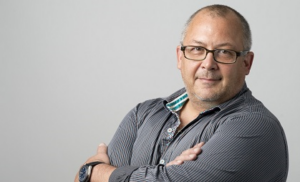
It is with profound sadness that we share the news of the passing of Professor Greg Hannon, who led the Cancer Research UK Cambridge Institute for over eight years.
Greg was already a world-renowned scientist when appointed Director, and for the community, he was a visionary leader, a cherished mentor, and a singular force of nature whose influence shaped the research landscape.
During his tenure, Greg led significant growth at the Institute, expanding faculty appointments, strengthening partnerships, establishing the Spatial Profiling and Annotation Centre of Excellence and securing £173 million for the Institute’s future. His inspirational leadership was vital in our response to COVID-19, setting up a diagnostics lab to support Addenbrooke’s Hospital during a critical and unpredictable period of the pandemic.
Beyond his international recognition, those of us who had the privilege of knowing Greg will remember him for his remarkable and unique intelligence, his good humour, and his sharp wit.
Greg believed that the greatest breakthroughs did not come from equipment or funding, but from the strength of community. He had a gift for making everyone, from PhD students to senior faculty, feel welcomed and heard.
At the heart of his leadership was a deep commitment to training the next generation of scientists, with the many students, post doctorates and support staff he mentored over the years standing as a testament to his lasting impact. There exists a worldwide family of Hannon Lab members, and adopted members, brought together by his lifelong dedication, generosity and support.
Greg undertook his undergraduate and doctoral training at Case Western Reserve University before joining Cold Spring Harbor Laboratory, where he established his research group and later became a Professor. In 2014, he moved to the UK to take up a position as Senior Group Leader at the Cancer Research UK Cambridge Institute and Fellow of Trinity College Cambridge, before becoming Institute Director in 2018.
Scientifically, Greg was recognised for his major contributions to cancer biology, mammalian genomics and small RNA biology. His early work focused on the discovery of cancer genes, including studies that led to the identification of cyclin‑dependent kinase inhibitors, in particular the discovery of p15, and their links to cancer, helping to shape the understanding of cell-cycle control in tumour biology.
Later, his work focused on small RNA biology. His research was central to understanding the biochemical mechanisms and biological functions of RNA interference, and he was among the first to demonstrate roles for microRNAs in cancer. His laboratory discovered the piRNA pathway, uncovering the mechanisms that protect the genome in reproductive cells.
Greg also played a leading role in shaping new approaches to spatial biology, bringing together diverse disciplines to study tumours as complex, spatially organised systems and he was one of the first recipients of the Cancer Grand Challenges awards. This programme underpinned efforts to understand tissue state transitions in breast cancer and formed the basis for the Spatial Profiling and Annotation Centre of Excellence.
He combined this world‑leading research with a strong entrepreneurial spirit, founding multiple spin‑out companies and working closely with industry to help bridge the gap between fundamental biology and meaningful change for cancer patients.
In recognition of his scientific excellence, he was elected a Fellow of the Royal Society, a Member of the US National Academy of Sciences, and a Fellow of the American Association for Cancer Research. In 2005, he received the AACR Award for Outstanding Achievement in Cancer Research.
He was a natural leader and had the ability to consistently inspire those around him, always wanting to tackle the biggest biological problems, usually in innovative and exciting ways. Greg Hannon made us better scientists, but more importantly, his leadership and vision made us better people. His lasting legacy will be his commitment to an open, collaborative culture, and we will miss him enormously.