Efficient “on demand” generation of complex mouse models
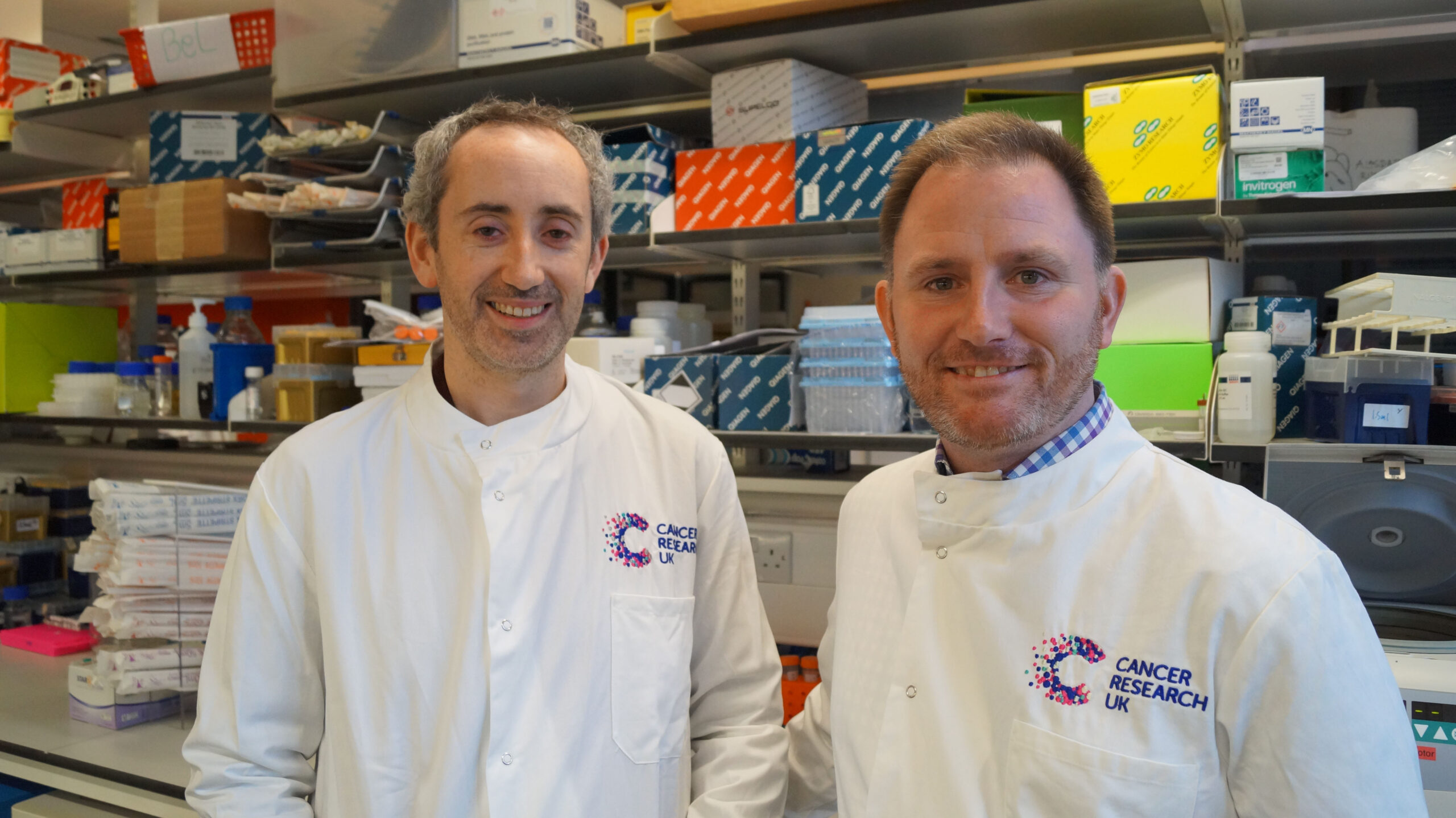
Dr Alasdair Russell and Dr Liam Cassidy have been awarded a Cancer Research UK Pioneer Award to develop an innovative genetic barcoding technology to generate complex mouse models.
Mice are often used as a model for human disease, with ninety-eight percent of human genes having a comparable gene in the mouse. Due to their short life span and fast reproductive rates, it is possible to investigate a wide range of biological processes at all stages of the life cycle.
Transgenic mice are most commonly created by the microinjection of DNA into a fertilised mouse egg, which is then implanted into a surrogate mother. The progeny is then bred with other transgenic offspring to establish a transgenic mouse line for research, with some of the offspring inheriting the correct genetic alterations.
This traditional approach of identifying the desired genetic alteration after mouse generation is often expensive and time consuming, particularly in cancer biology where multiple genetic alterations are often combined – meaning it can take between six months to three years to generate a mouse model.
Dr Alasdair Russell and Dr Liam Cassidy have been awarded £200,000 from Cancer Research UK to develop a novel barcoding method which will make the generation of complex mouse models quicker and more efficient.
Using innovative barcoding technology, the project will identify and exploit key cell-intrinsic factors to allow researchers to isolate the transgenic embryonic stem cells that will generate mice with the desired genetic alterations. This will eliminate the need for breeding colonies and shorten the time for generating a mouse model from years to as little as four weeks.
In the future, this new method could allow scientists to reimagine their approach to in vivo research, creating specific mice in an “on demand” fashion, reducing the need for breeding stocks, and speeding up the pace of research in an ethically palatable manner.
Related News
See all news-
Hannon Group joins global team to decode cancer’s dark proteome
4th March 2026
Prof Greg Hannon and his group joins global Cancer Grand Challenges team taking on the dark proteome challenge.
Find out more -
New immune pathway offers treatment hope for childhood brain tumours
3rd February 2026
A newly discovered immune pathway could lead to gentler treatments for multiple childhood brain cancers, according to new research from our Gilbertson Group published today in Nature Genetics.
Find out more -
Order of cancer-driving mutations affects the chance of tumour development
3rd December 2025
New research from the Winton Group has revealed that the order of cancer-driving mutations plays an important role in whether tumours in the intestine can develop.
Find out more