Crossley Group
RNA in genome stability and immunity
Research Summary
RNA-DNA hybrid structures called R-loops can contribute to cancer development when incorrectly regulated. We focus on how these hybrids form, their impact on cancer, and their potential as biomarkers to diagnose cancer.
Overview
Nucleic acids are macromolecules that are essential for life and, classically, come in two varieties: DNA, which carries genetic information, and RNA, required to make proteins.
We are interested in uncovering the functions of fusion molecules of RNA and DNA, termed RNA-DNA hybrids. While short RNA-DNA hybrids are transient intermediates, longer hybrid structures, called R-loops, can form on the genome when nascent RNA hybridizes to its DNA template during transcription. These three-stranded structures have physiological roles in regulating gene expression and immune cell function, but dysregulation of R-loops can threaten the maintenance of our genome. Elevated genomic R-loops have been linked to human diseases including cancer and neurodegeneration. We investigate, at the molecular level, how R-loops and RNA-DNA hybrids become pathological in cancer cells.
We recently discovered that when R-loop metabolism is dysregulated by cancer-associated mutations or splicing defects, some R-loops are acted on by nucleases, leading to the excision of RNA-DNA hybrids. These excised RNA-DNA hybrids are exported from the nucleus and build up in the cytoplasm of cells, activating an innate immune response (Crossley, Song et al., Nature, 2023). Building on this central finding, we will investigate the biogenesis of cytoplasmic RNA-DNA hybrids in cancer cells, using cutting-edge, biochemical, computational, genomics and imaging approaches.
We aim to explore cellular responses to RNA-DNA hybrids that may contribute to genomic instability and inflammation and promote cancer. We will then harness our mechanistic understanding of the aberrant build-up and cellular release of RNA-DNA hybrids to develop new approaches for cancer detection and stratification.
Research areas
- Characterizing the genomic sources of cytoplasmic RNA-DNA hybrids.
- Exploring cellular responses to RNA-DNA hybrids in cancer and immunity.
- Developing strategies that harness RNA-DNA hybrids for cancer detection and stratification.


Dr Magdalena Crossley
Junior Group Leader
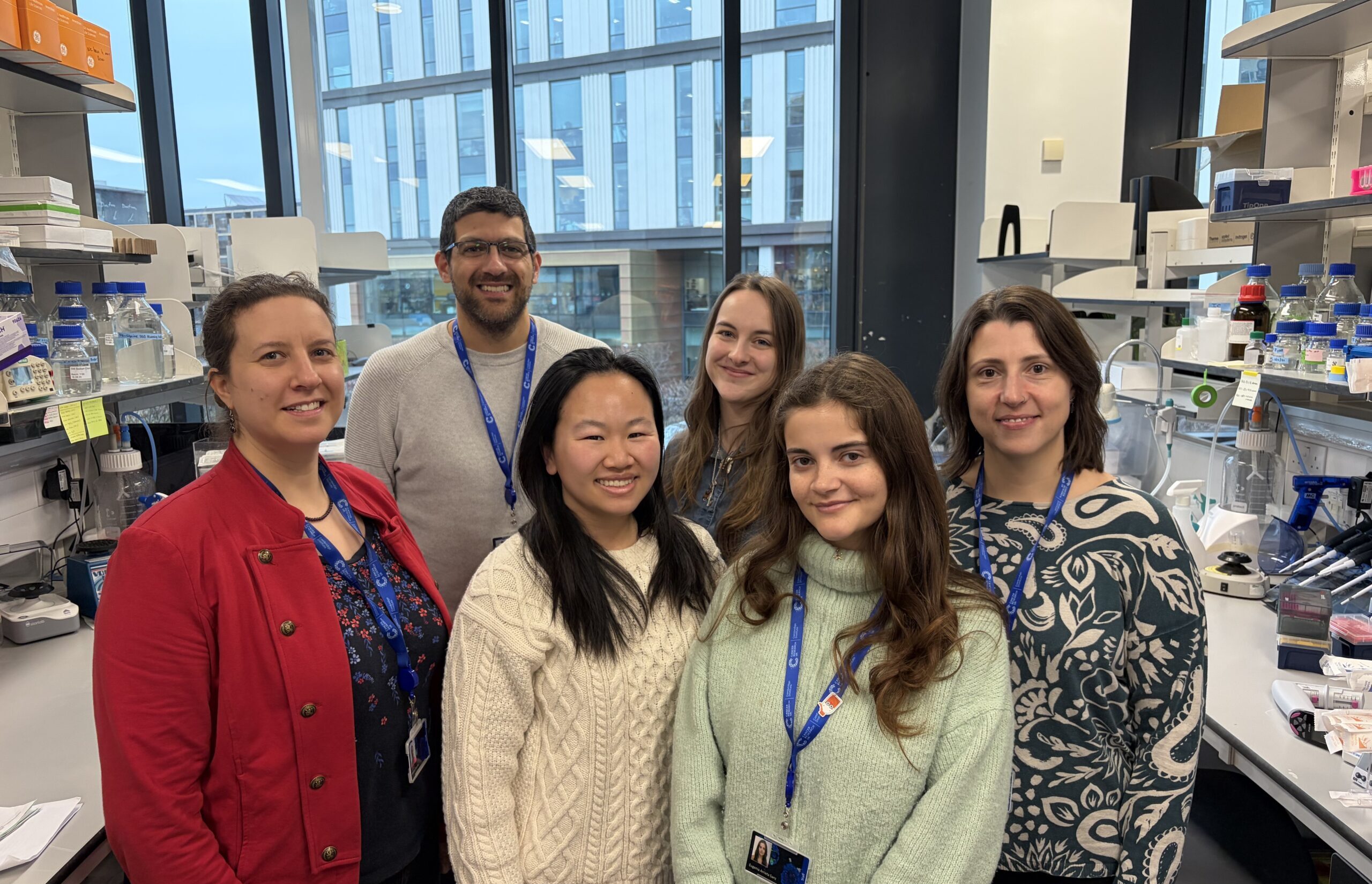
Group Members
-

Madzia Crossley
Group Leader
-

Marion Karniely
Research Administration Manager
-

Julia Mawer
Senior Scientific Associate
-

Eugenia Arrieta Sanz
PhD Student
-

Justina Pangonyte
PhD Student
-

Cameron Chee
PhD Student
Contact the Crossley Group
We welcome queries about our research and potential collaborations, and we are happy to receive informal enquiries about positions within the group.
Follow the adjacent link to get in touch.



Publications
See all publications-
R-loop-derived cytoplasmic RNA-DNA hybrids activate an immune response.
Crossley Group
E-pub date: 1 Jan 2023
-
Protocol for in vivo DNA-RNA hybrid immunoprecipitation, sequencing, and analysis from frozen mouse tissues.
Crossley Group
E-pub date: 23 Jul 2026
-
AAV-mediated genome editing is influenced by the formation of R-loops.
Crossley Group
E-pub date: 4 Dec 2024
-
Catalytically inactive, purified RNase H1: A specific and sensitive probe for RNA-DNA hybrid imaging.
Crossley Group
E-pub date: 6 Sep 2021