Scientists discover new route to boost pancreatic cancer treatment
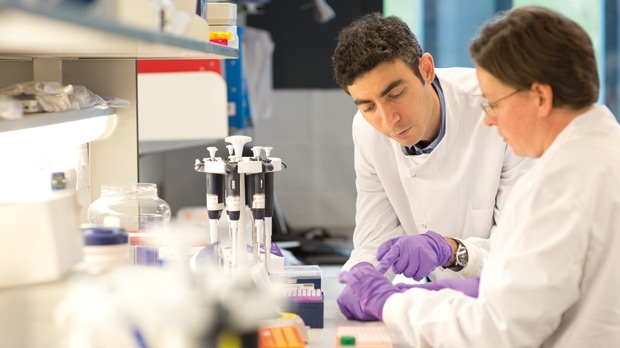
Cancer Research UK z, according to research* published in the British Journal of Cancer (BJC), today (Friday).
The scientists, based at the Cancer Research UK Cambridge Institute, have discovered that gemcitabine interacts with an important pathway in cells – called the Kennedy Pathway – which cells use to make special fats.
This research has identified that the drug is broken down in tumour cells by enzymes in the Kennedy Pathway, which might be an alternative way in which it works.
The findings also suggest that using linoleic acid in combination with gemcitabine increases the amount of gemcitabine in tumour cells, possibly making it more effective.
Study author, Professor Duncan Jodrell, group leader at the Cancer Research UK Cambridge Institute, said: “Gemcitabine is one of the drugs that we use commonly to treat pancreatic cancer, but the number of patients who benefit from it is still relatively small.”
“Improving our understanding of how gemcitabine interacts with cellular metabolism may allow us to develop combination treatments that improve outcomes for patients with pancreatic cancer.”
Around 8,800 people are diagnosed with pancreatic cancer in the UK every year but progress has been slow, with only around three per cent of people surviving their disease five years or more.
Nell Barrie, Cancer Research UK’s senior science communications officer, said: “Sadly, survival from pancreatic cancer is still low and we must do everything we can to fight this challenging disease with better treatments and ways to diagnose it early, when treatment is more effective.
“We’re making progress but it needs to be much faster, which is why Cancer Research UK is prioritising research into pancreatic cancer to save more lives from the disease.”
Related News
See all news-

Dr Magdalena Crossley awarded £2 million Wellcome Career Development Award
11th September 2026
Dr Magdalena Crossley has been awarded a £2 million Wellcome Career Development Award to investigate how unusual RNA-DNA structures contribute to cancer and other diseases.
Find out more -
Study reveals how our inherited genes interact with DNA damage to drive cancer
27th July 2026
Find out more -

Dr Guiping Wang appointed as a Junior Group Leader
18th May 2026
Dr Guiping Wang joins the Cancer Research UK Cambridge Institute as a Junior Group Leader, starting in September 2026.
Find out more