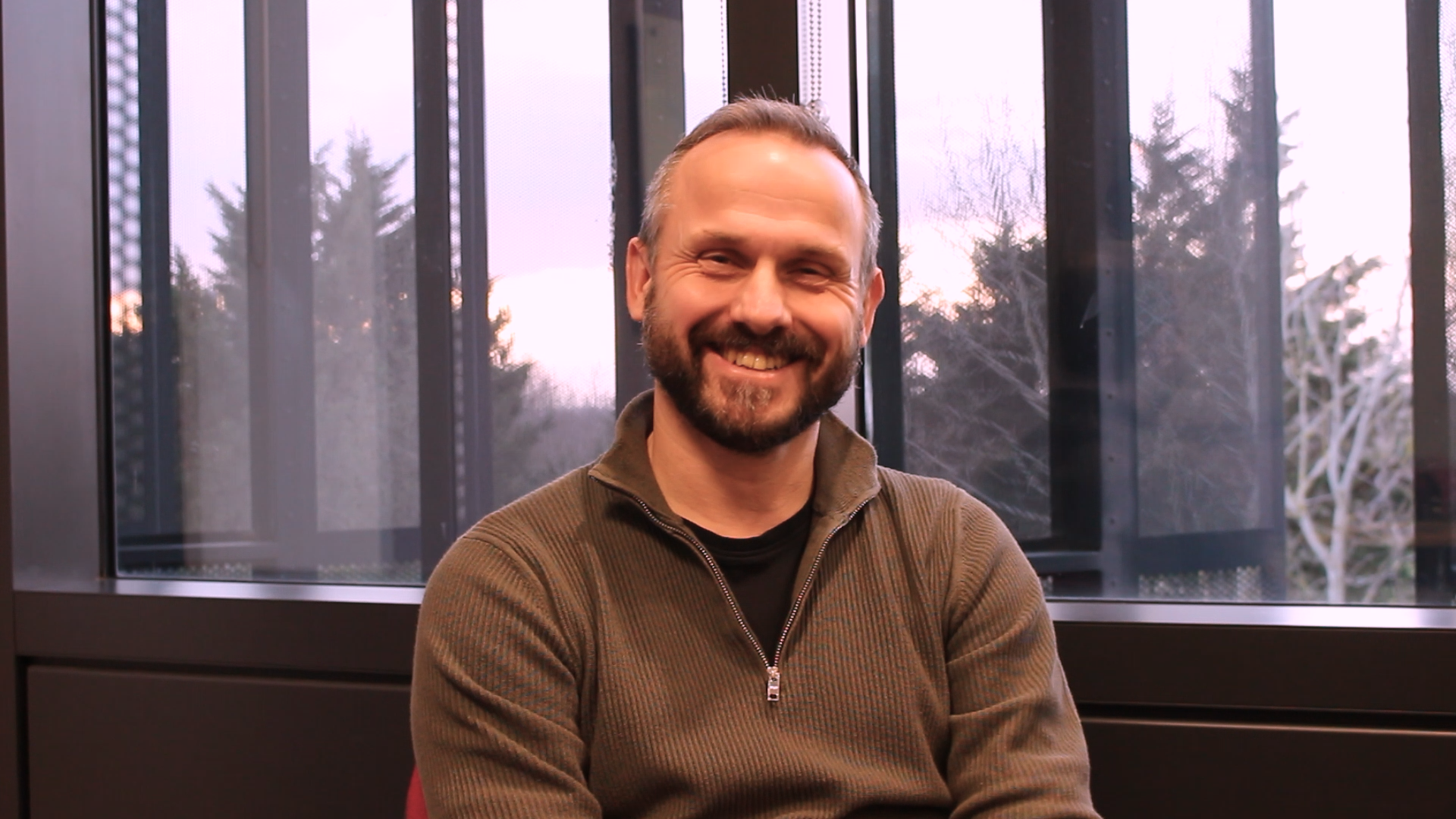
Atif Khan, Research Associate
As a Research Associate in our Ali Group, Atif builds AI methods to scale up the data acquisition and analysis of cancer in a spatial context.
Atif became interested in a studying computing thanks to a cousin with similar interests. After finishing a computer science degree, he moved into studying in mitochondrial diseases and more recently made the transition to cancer research. Now he works in our Ali Lab where he uses AI and other technologies to look at the spatial biology of cancers. His day-to-day involves working with large amounts of data.
Check out his full interview and read the additional Q&A with him below.
What role does computing play in your research?
“We use computational tools for various things. One of them might be to understand, how you predict the outcomes of various treatments and things like that. But day to day they are used for lots of things, from data acquisition and processing data for analysis to, down at the downstream end, analysing data and pulling out information.”
Do you have a favourite computation tool that you use in the lab?
“Whatever is needed to solve a problem is my favourite tool of the day! I don’t have a favourite tool or computational language. It all depends on the problem you’re working on.”
You mentioned that your lab handles a lot of data. Can you put that into perspective?
“One of the images we look at can be about 3GB to 4GB per file and we have thousands of those files. And then there’s modalities like Imaging Mass Cytometry (IMC) and the other imaging technologies we use; I don’t have like exact figure for you but it’s in terabytes.”
You mentioned AI in your episode as being something you have followed since around 2015. With all the buzz in the last two years, what changes have you seen in the field?
“Obviously, the main thing is the hype around large language models in the last 2 to 4 years. That is kind of good but I think it has taken the limelight or rather put a spotlight on AI for the public. It has defined, in some sense, the capabilities of AI: that you can prompt it to generate whatever you would like, like code, or to write letters and things like that. But AI is much more and I think we sometimes might not appreciate that.
There are various kinds of AI models and types of models that are designed for different problems. I think what we see at this point of time, is not representative of the capabilities of AI. And, I think, as we go further into the future, I see many more new avenues of problems that can be solved using different AI models.”
What are your colleagues in the Ali Lab like? Do you all share a computer science background?
“There are around ten people in the lab, but we have diverse kinds of skillsets. We have clinicians, we have computational scientists, we have biologists or lab scientists. So, although we come from very, like, different various backgrounds, we all assimilate, we interact with the one single purpose: spatial biology in the context of cancer.”
Are you currently learning any new skills?
“So, the area that I’m developing my skills in at the moment is to do with cancer research. I come from a different background where I’ve applied AI to a different disease type: mitochondrial. What I’ve been learning in the last few months is what things are relevant in cancer, where the opportunities are to apply my skills, and how to make things better for patients.”